Welcome to Janav’s blog
👇 Feel free to connect with me

Main Design Patterns Design patterns are typical solutions to common problems in software design. They are like pre-made blueprints that one can customize to solve recurring design problems in code. There are 23 classic design patterns defined by the “Gang of Four”. But some are more frequently used in real-world applications than others. Categories of Design Patterns There are three main categories of design patterns: 1. Creational Patterns 1.1 Singleton Purpose: Ensure a class has only one instance and provide a global point of access to it....
Main Design Patterns Design patterns are typical solutions to common problems in software design. They are like pre-made blueprints that one can customize to solve recurring design problems in code. There are 23 classic design patterns defined by the “Gang of Four”. But some are more frequently used in real-world applications than others. Categories of Design Patterns There are three main categories of design patterns: 1. Creational Patterns Creational patterns deal with object creation mechanisms, trying to create objects in a manner suitable to the situation....

Contents 1. Collections: List , Dictionary , Set , Tuple , Range , Enumerate , Iterator , Generator . 2. Types: Type , String , Regular_Exp , Format , Numbers , Combinatorics , Datetime . 3. Syntax: Args , Inline , Import , Decorator , Class , Duck_Types , Enum , Exception . 4. System: Exit , Print , Input , Command_Line_Arguments , Open , Path , OS_Commands ....
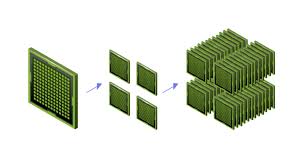
When implementing $O(N^3)$ operations like matrix multiplication in C++, computational complexity is only half the picture. The physical architecture of the CPU memory hierarchy dictates execution speed just as much as the algorithm itself. By analyzing how the CPU interacts with the L1 cache, we can optimize memory access patterns to yield massive performance gains without changing the underlying mathematical logic. Understanding the L1 Cache To understand the optimization, you need a baseline understanding of CPU caching....

S.No Use Cases Commands 1. See all images present in your local machine docker images 2. Search images in docker-hub (registry) docker search MODULENAME 3. Download image from docker-hub to local machine docker pull MODULENAME 4. Run Docker (Create+Start+Name+Go Inside the Container) docker run -it --name CONTAINERNAME IMAGENAME /bin/bash 5. Check service start or not service docker status OR docker info 6. Start Container docker start CONTAINERNAME 7. Go inside Container docker attach CONTAINERNAME 8....

Intermediate Python 1. List Oredered, mutable, allows duplicate items & different data types Creating print("1.1 using [] - list constructor") a1=["banana","cherry","apple"] a2=["banana",2,True,'a'] a3=["a","a"*2,"a"*3] # output: ['a', 'aa', 'aaa'] a20=[20]*10 a21=[1]*10 a22=a20+a21 print(a1,a2,a3,a20,a21,a22,"\n") print('''1.2 using "list()"''') a4=list(a1) a5=list(range(1,6)) a6=list("janav makkar") # output: ['j', 'a', 'n', 'a', 'v', ' ', 'm', 'a', 'k', 'k', 'a', 'r'] a7=list() a8=list(["ab","bc","cd"]) print(a4,a5,a6,a7,a8,"\n") print("1.3 using list comprehensions") a9=[1,2,3,4,5,6,7,8,9,10] a10=[i for i in a9 if i%2==0] a11=[i**2 for i in a9] a12=[i*12 for i in range(11,20)] print(a10, a11, a12,"\n") ### Accessing print("2....

Min-Heap Min-Heap is a complete binary tree where the parent node is always smaller than or equal to its child nodes. Since a Min Heap is a Complete Binary Tree, it is commonly represented using an array. In an array representation: The root element is stored at Arr[0]. For any i-th node (at Arr[i]): Parent Node → Arr[(i - 1) / 2] Left Child → Arr[(2 * i) + 1] Right Child → Arr[(2 * i) + 2] Operations on Min Heap getMin(): It returns the root element of Min Heap....

1. Class and Object A class is a blueprint for creating objects. It defines a set of attributes and methods that the objects of that class will have. class Dog: def __init__(self, name, breed): self.name = name self.breed = breed def bark(self): return f"{self.name} says Woof!" # Creating an object my_dog = Dog("Buddy", "Golden Retriever") print(my_dog.bark()) # Output: Buddy says Woof! Illustration: Class (Dog) +-------------------+ | Attributes | | - name | | - breed | | | | Methods | | - bark() | +-------------------+ ^ | | Instance | +-------------------+ | Object (my_dog) | | name: Buddy | | breed: Golden | | Retriever | +-------------------+ 2....
1. Property Decorators Properties allow you to use methods like attributes, providing a clean way to implement getters, setters, and deleters. class Temperature: def __init__(self, celsius): self._celsius = celsius @property def celsius(self): return self._celsius @celsius.setter def celsius(self, value): if value < -273.15: raise ValueError("Temperature below absolute zero is not possible") self._celsius = value @property def fahrenheit(self): return (self.celsius * 9/5) + 32 @fahrenheit.setter def fahrenheit(self, value): self.celsius = (value - 32) * 5/9 temp = Temperature(25) print(temp....
1. Database Connection Pool using Singleton and Context Manager Problem: Managing database connections efficiently in a multi-threaded application. Solution: Use the Singleton pattern to ensure a single connection pool, and a context manager for safe connection handling. import threading from contextlib import contextmanager class DatabasePool: _instance = None _lock = threading.Lock() def __new__(cls): if cls._instance is None: with cls._lock: if cls._instance is None: cls._instance = super().__new__(cls) cls._instance.connections = [] return cls....